The goal
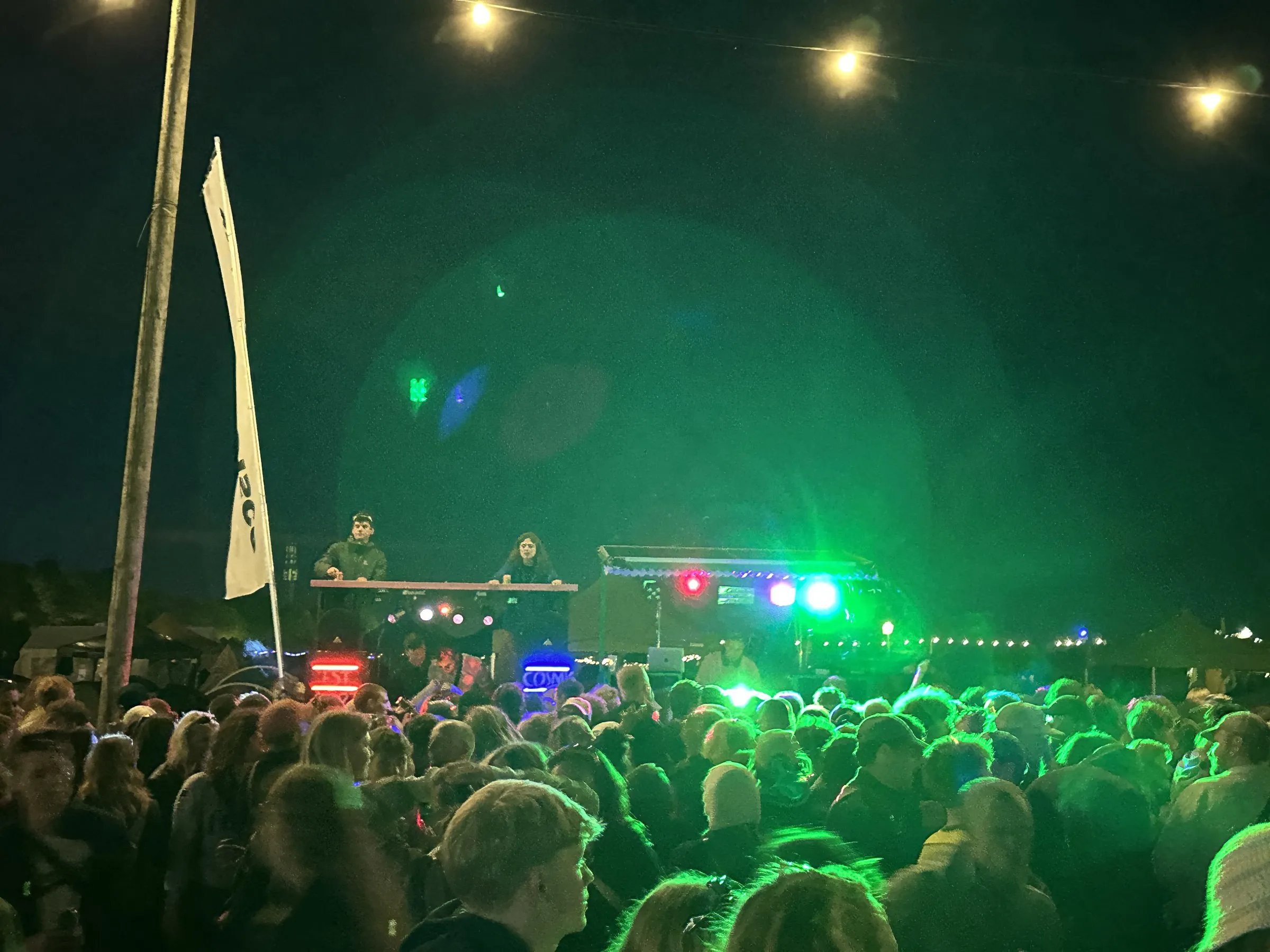
Long before the university projects, sound systems were the first engineering builds: each one bigger and more complete than the last. What started as a portable battery speaker in 2015 grew into a solar-powered mobile PA that has been in use at festivals since 2017.
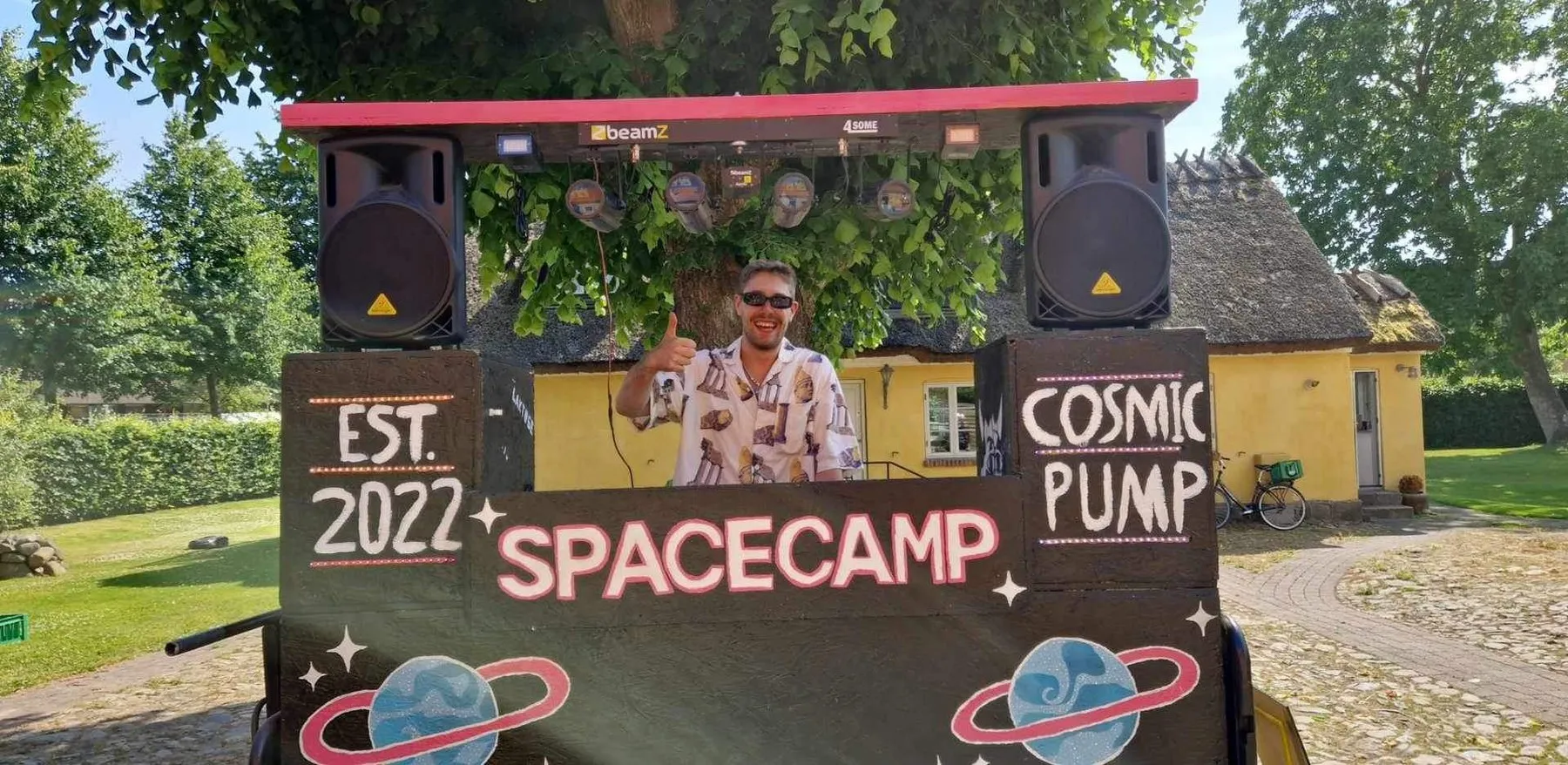
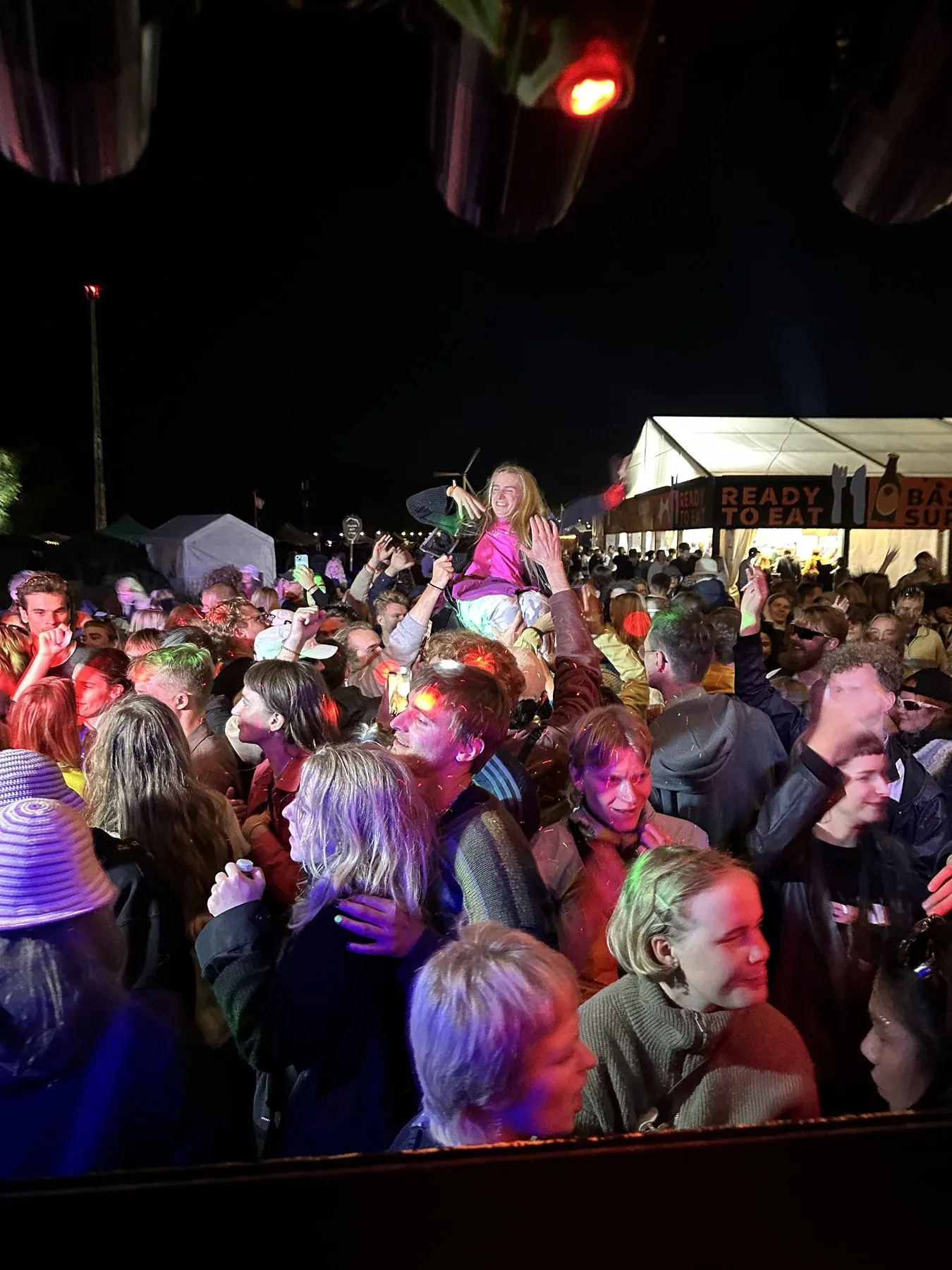
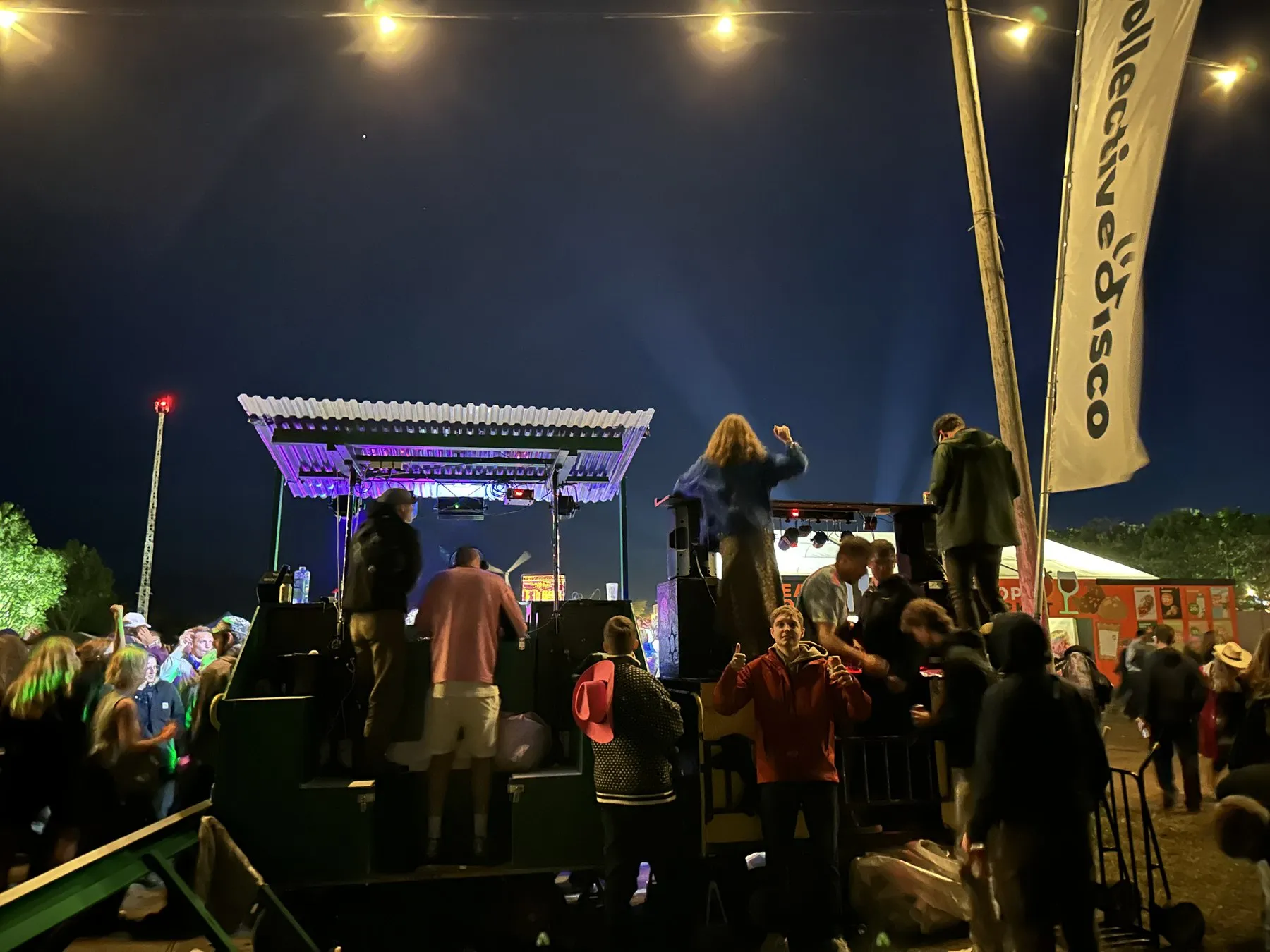
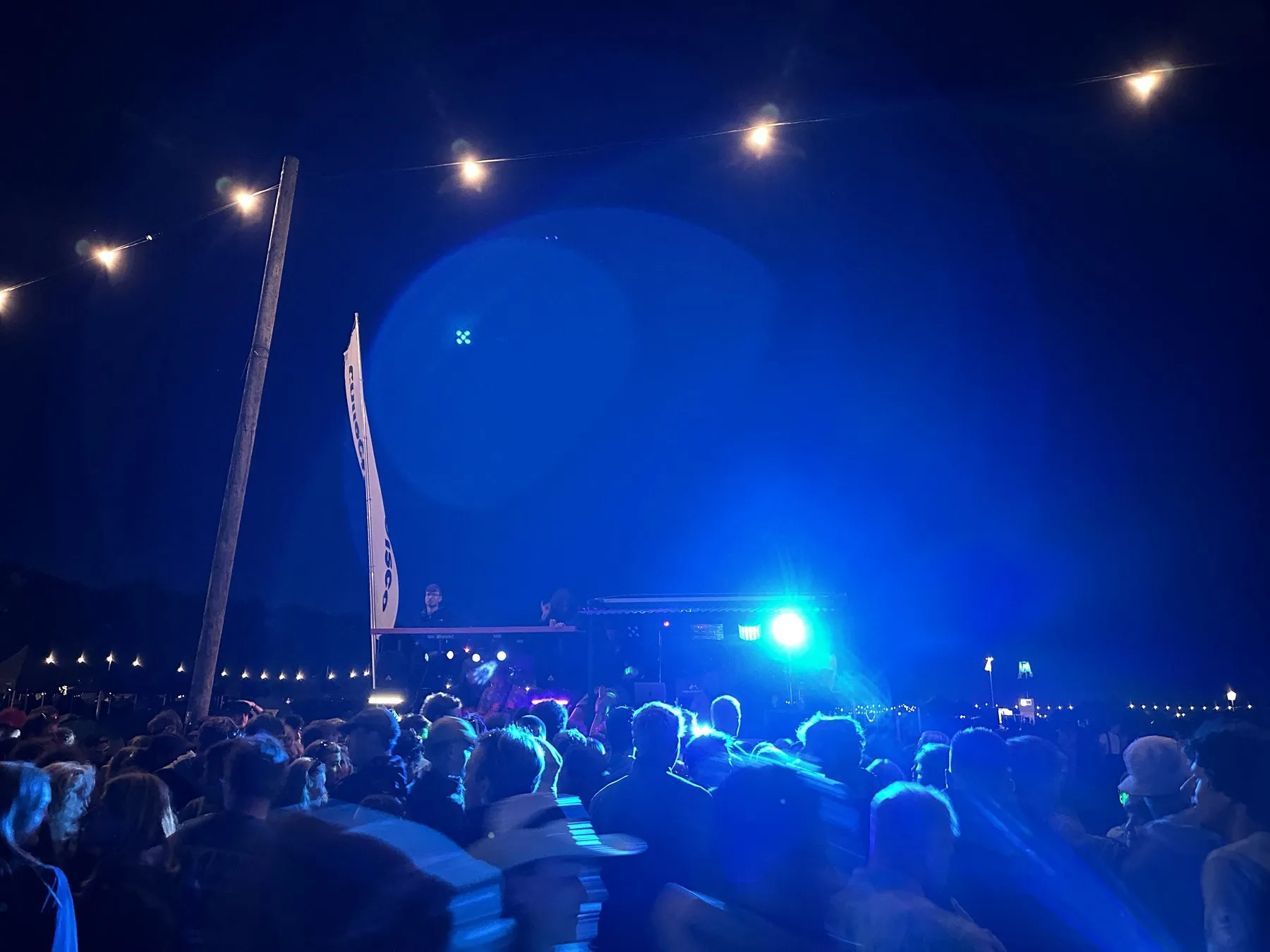
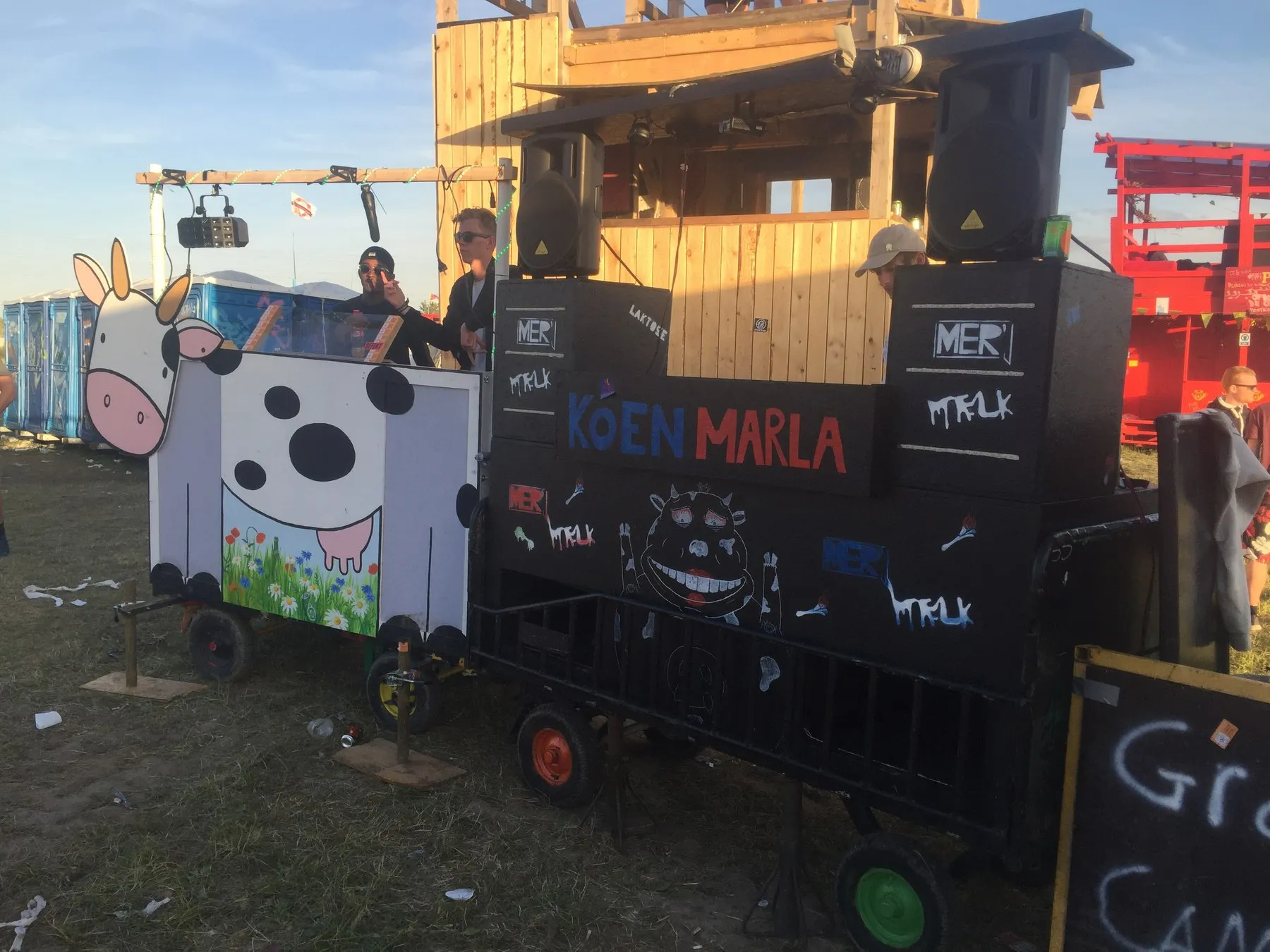
The PA as the DJ booth of a festival camp, 2022.
My involvement
Designed, built and wired all four systems: cabinet fabrication from published plans, driver and amplifier installation, battery and solar power systems, the SketchUp design of the mobile PA, and its upgrades over the years.
2015: Boominator
The first build was a Boominator, a portable twin speaker built from published plans: plywood cabinets with separate chambers, drivers and tweeters, a lead-acid battery and a car amplifier, all in one enclosure that could be carried to a party.
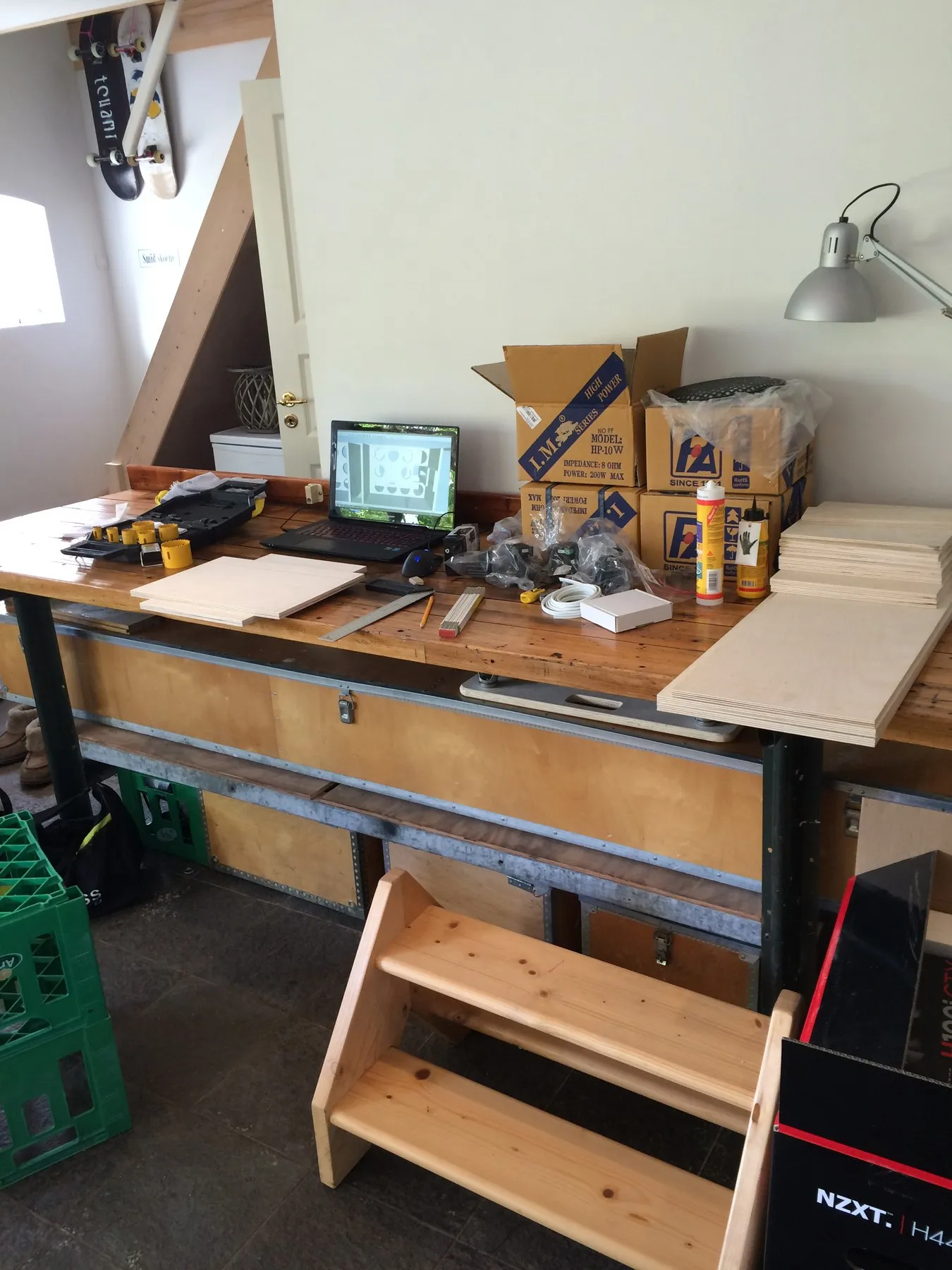
The plywood panels and parts laid out for the build.
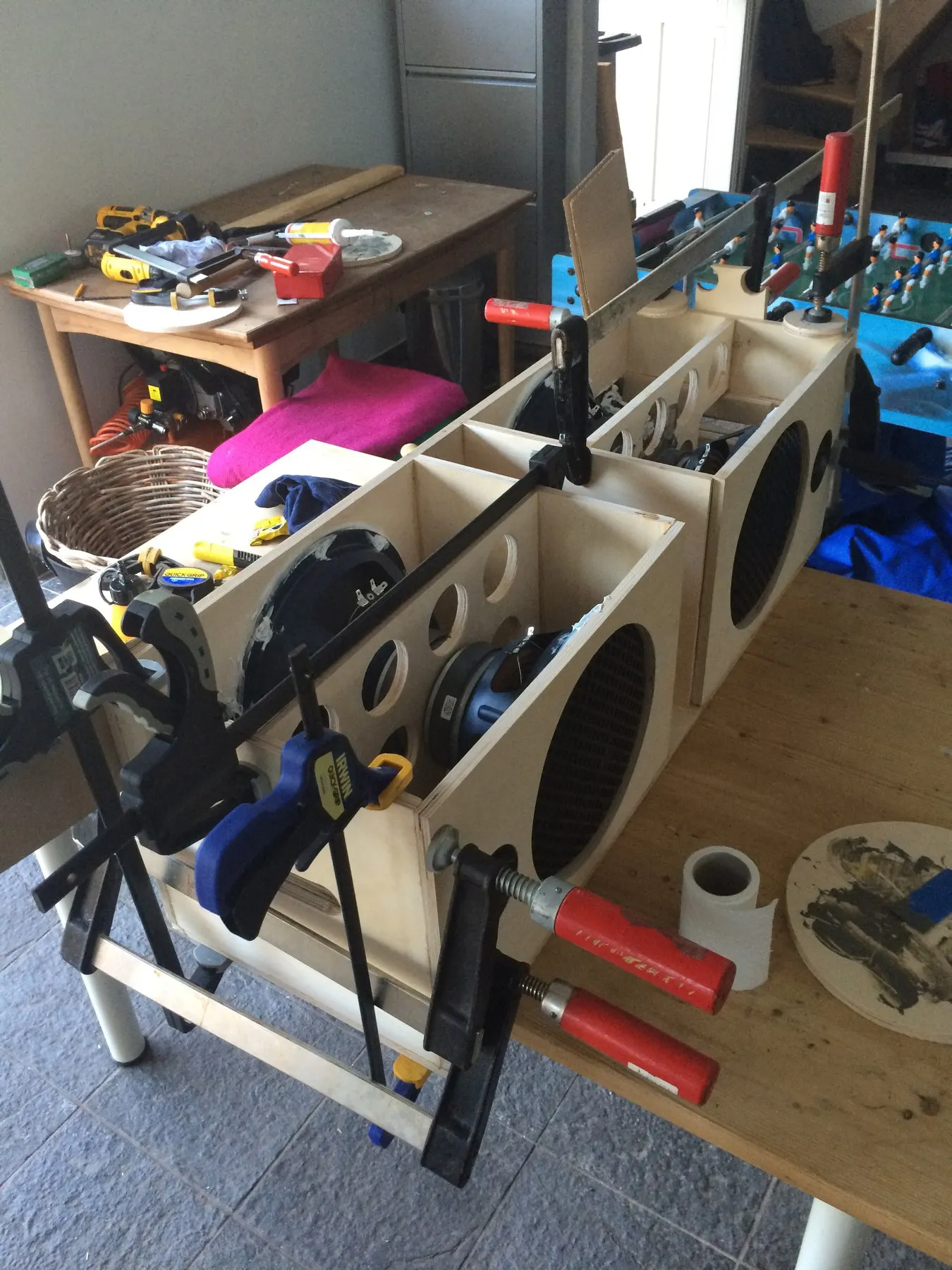
Gluing and clamping the cabinets.
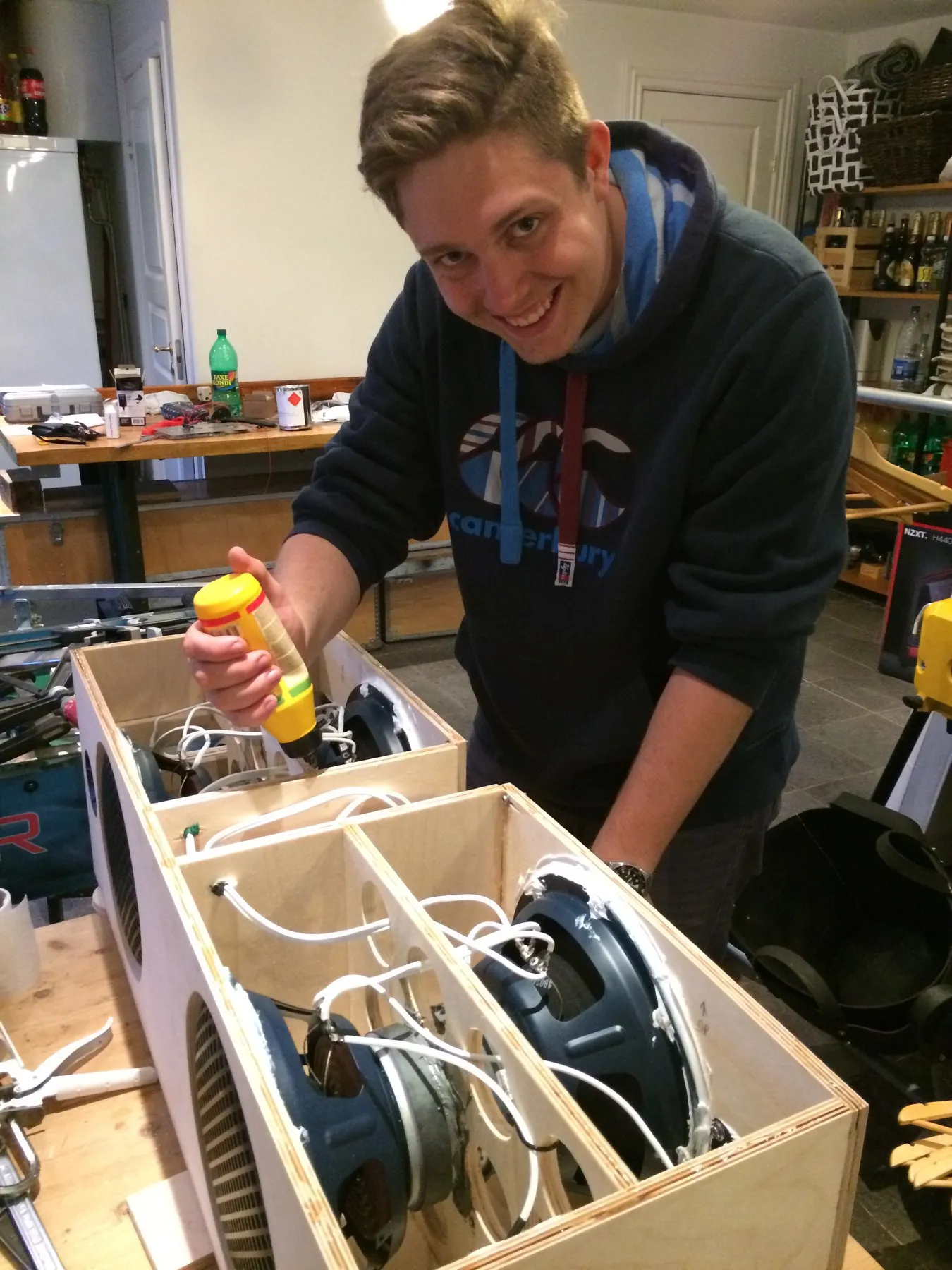
Sealing and wiring the Boominator cabinet.
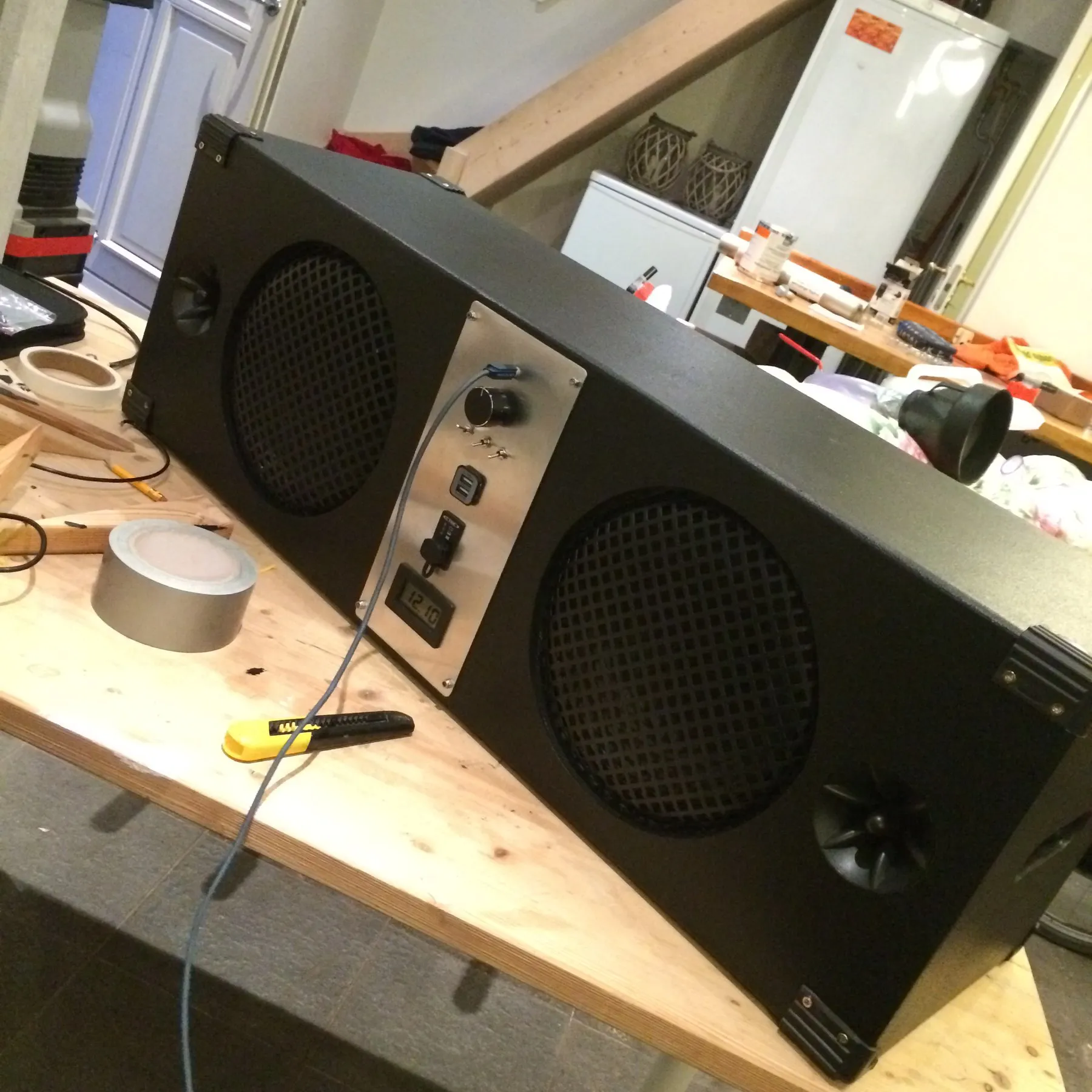
The finished Boominator.
2016: Two CUBO 15 subwoofers
For more bass, two CUBO 15 subwoofers were built from published plans. The cabinet folds the air path inside the box, so a 15-inch driver gives deep bass from a compact enclosure. The panels were cut, assembled and sealed, and the cabinets finished with a hard-wearing black coating and corner protectors.
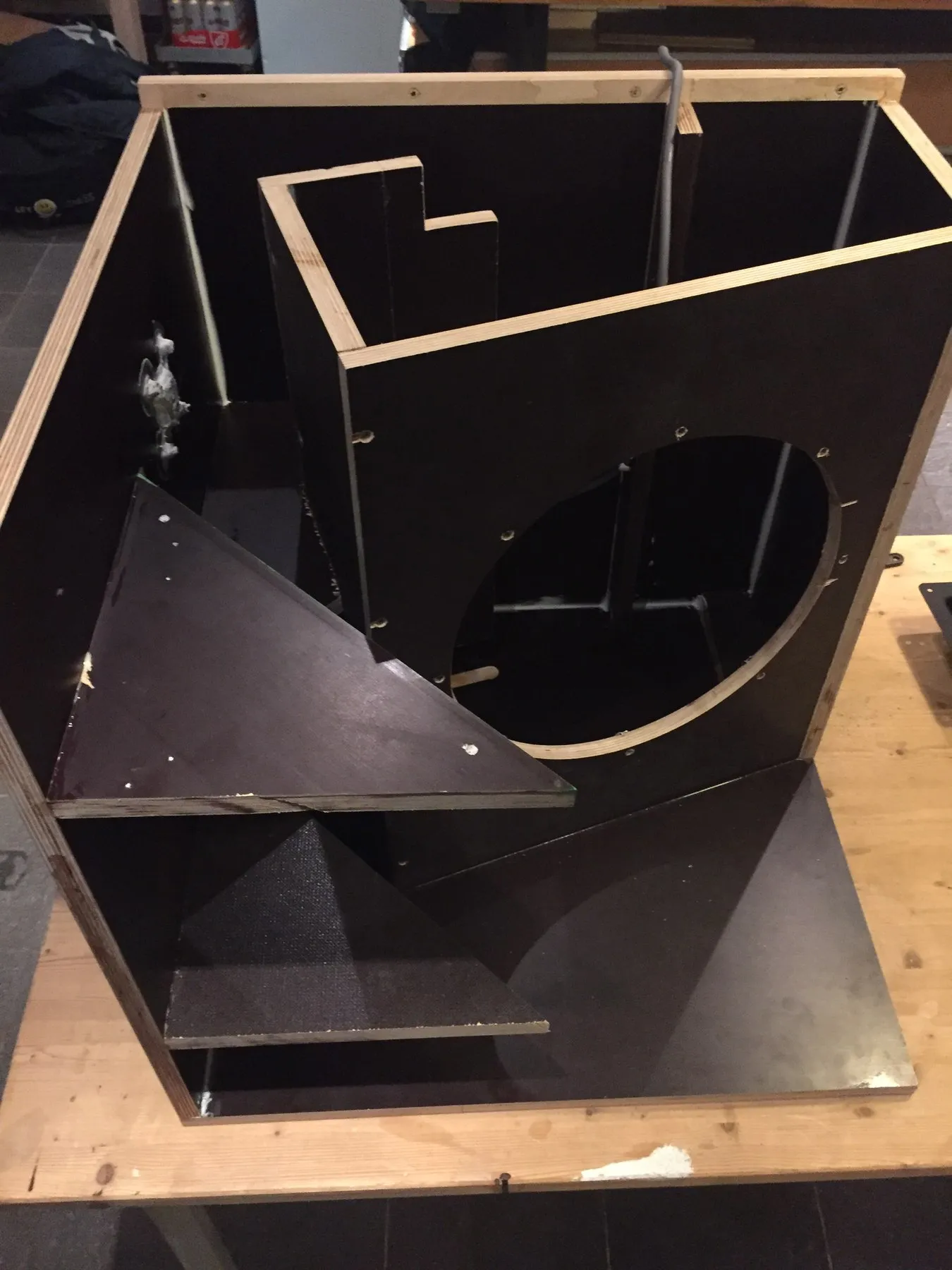
The folded air path inside a CUBO 15 cabinet during assembly.
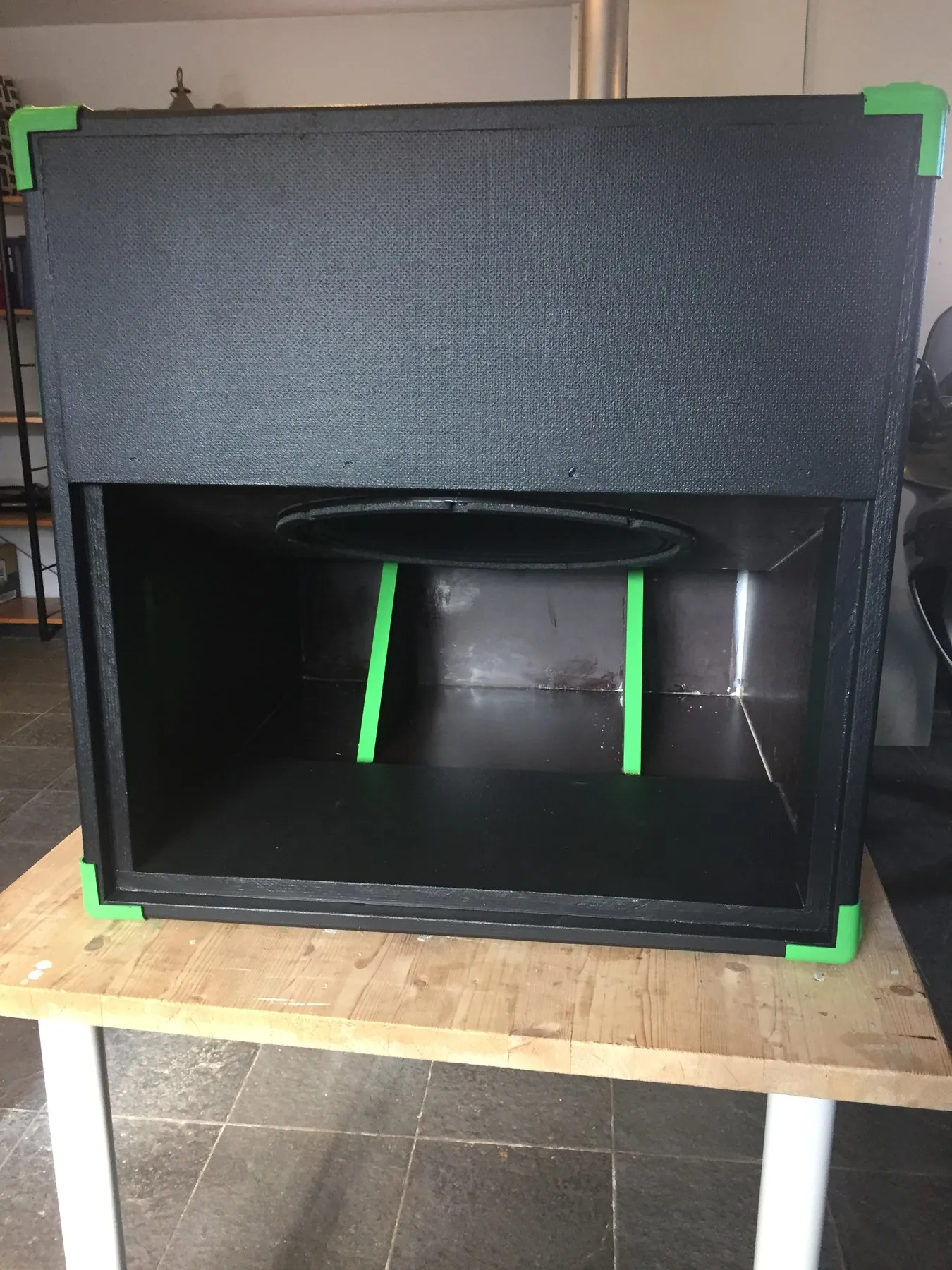
A finished CUBO 15 subwoofer.
To drive the CUBOs, a large Pioneer amplifier was added. The Boominator was then redesigned so that its small internal amplifier could be bypassed: plugging in a speaker cable with an 8-pole connector disconnects the internal amplifier and lets the external Pioneer amplifier drive the speakers instead. There are no switches; the connector itself does the switching mechanically.
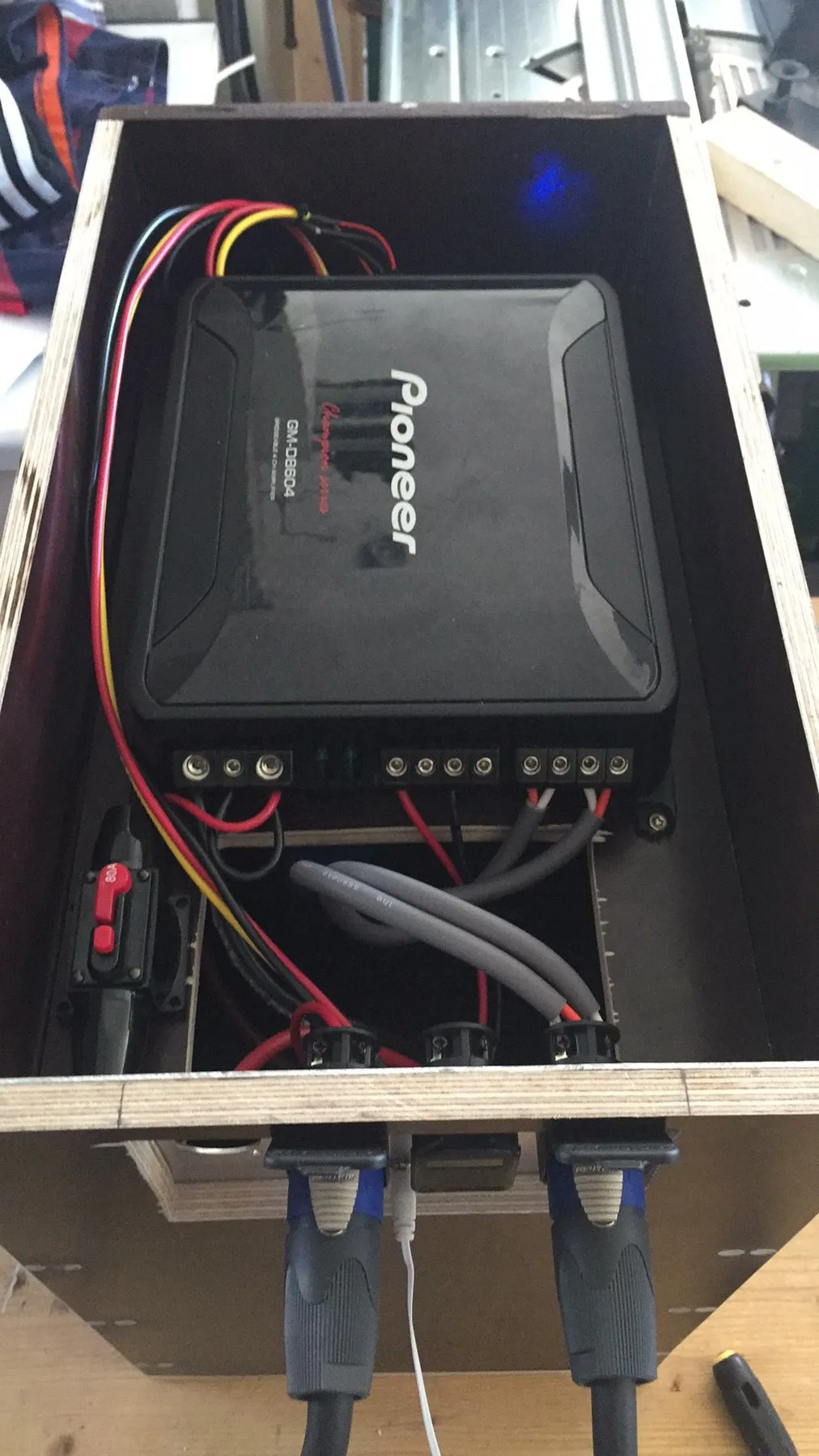
The large Pioneer amplifier, mounted in a separate battery and amplifier box that feeds the CUBOs and the Boominator.
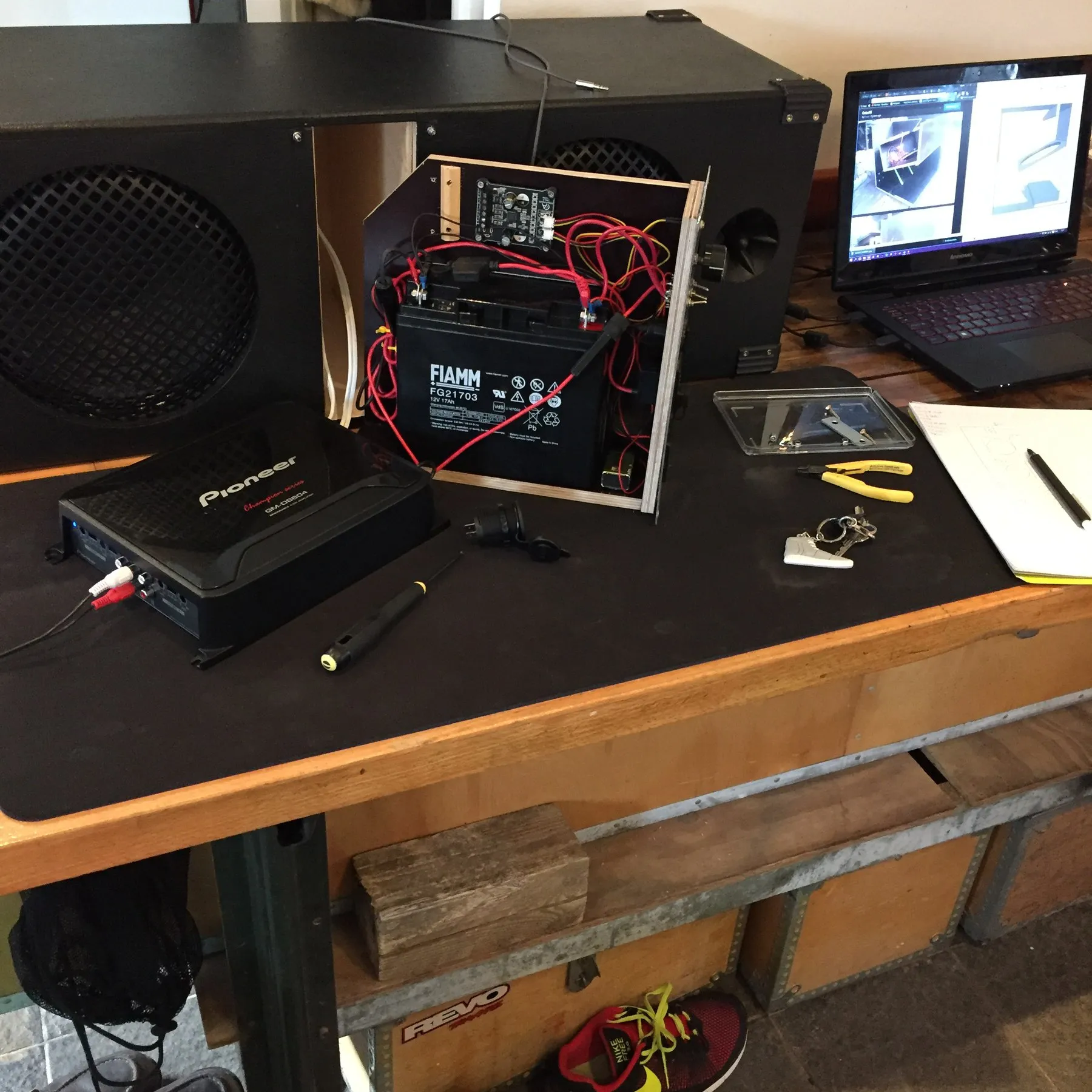
The Boominator’s electronics during the redesign, next to the external Pioneer amplifier.
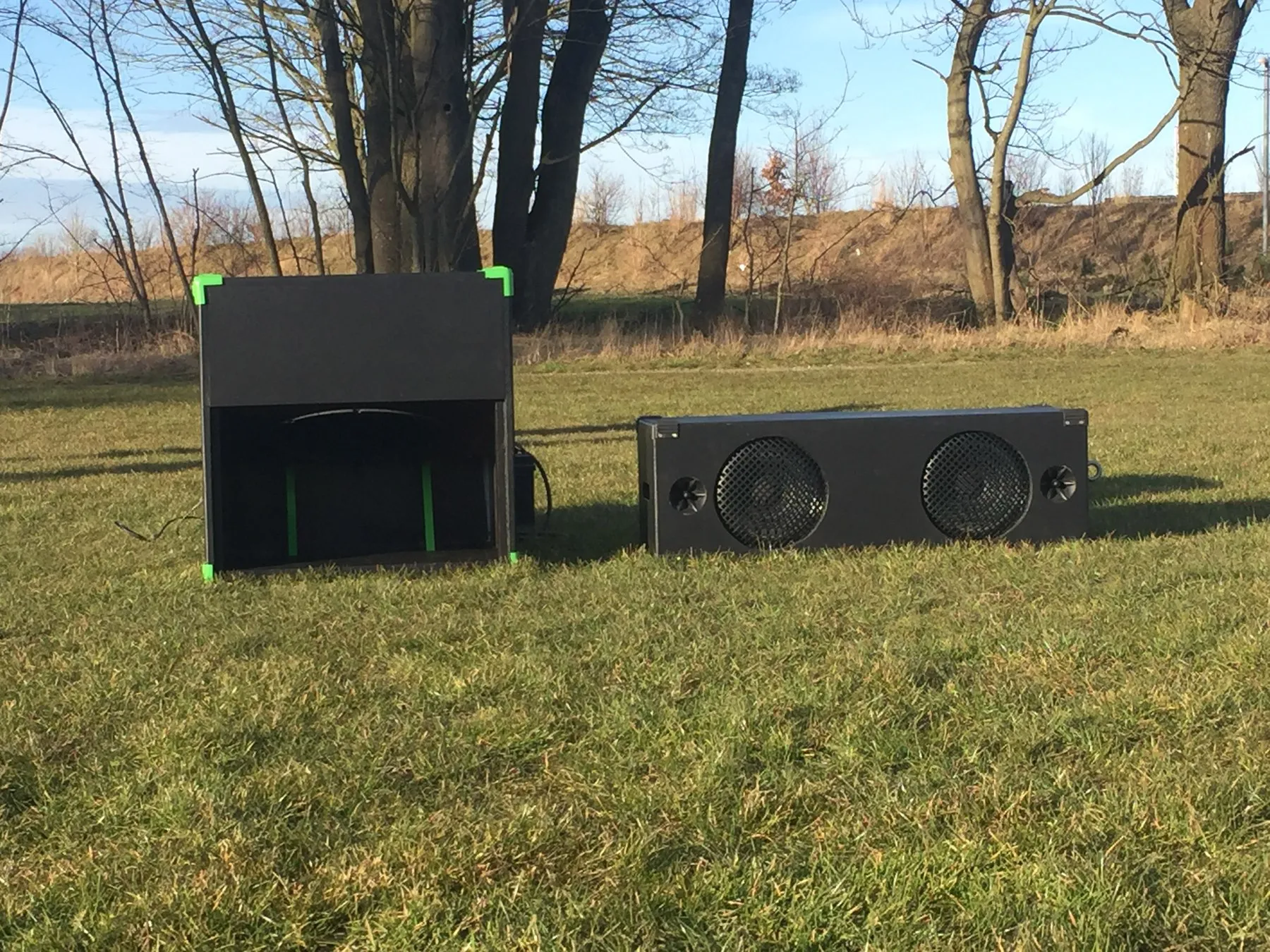
The first finished CUBO 15 and the Boominator playing together.
2016: Halfinator
The Halfinator is a half-size Boominator: a single portable cabinet with the same idea in a smaller package, with its own battery, amplifier board, drivers and horn tweeters. It was built for my younger brother.
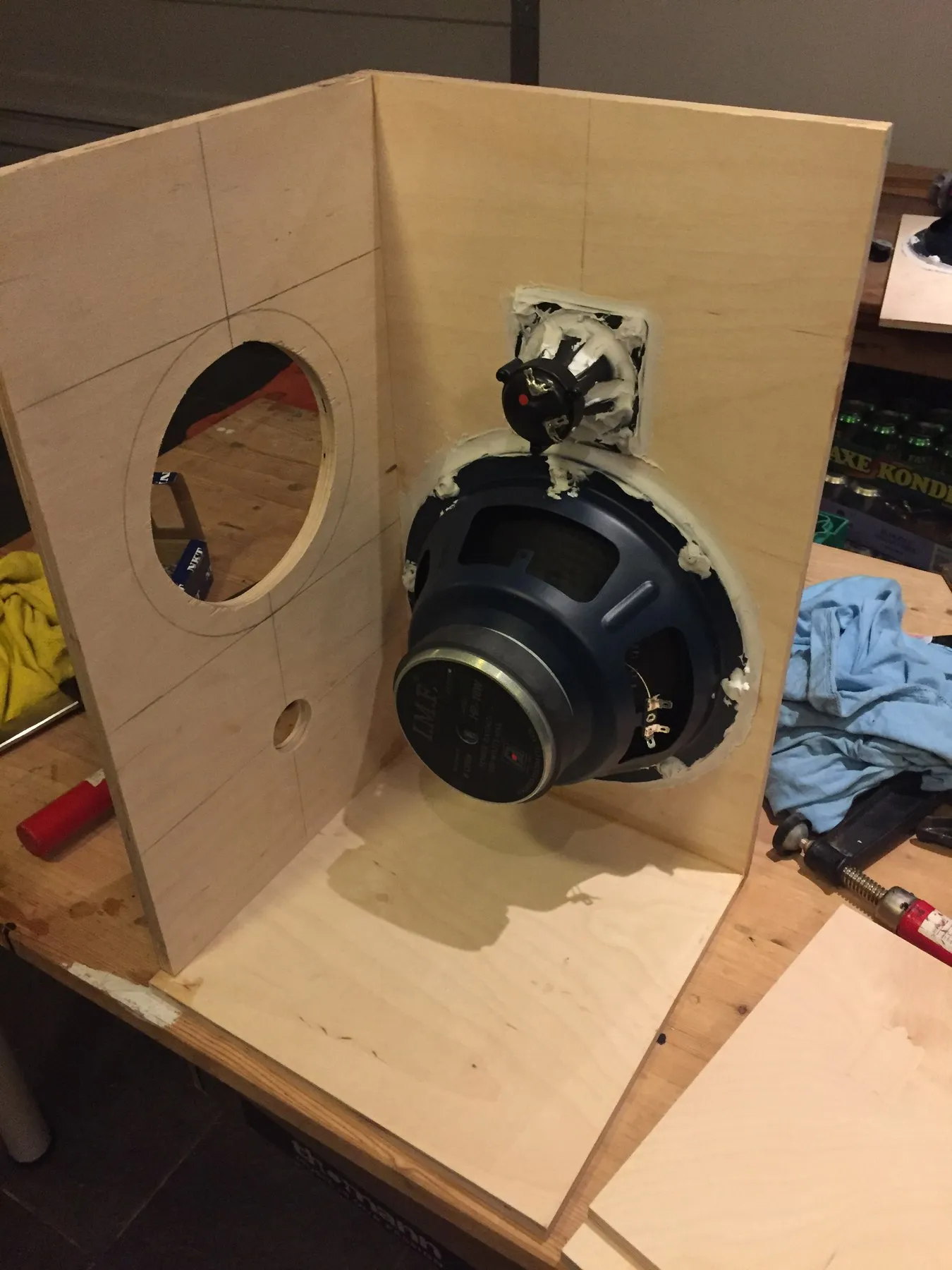
The Halfinator during assembly.
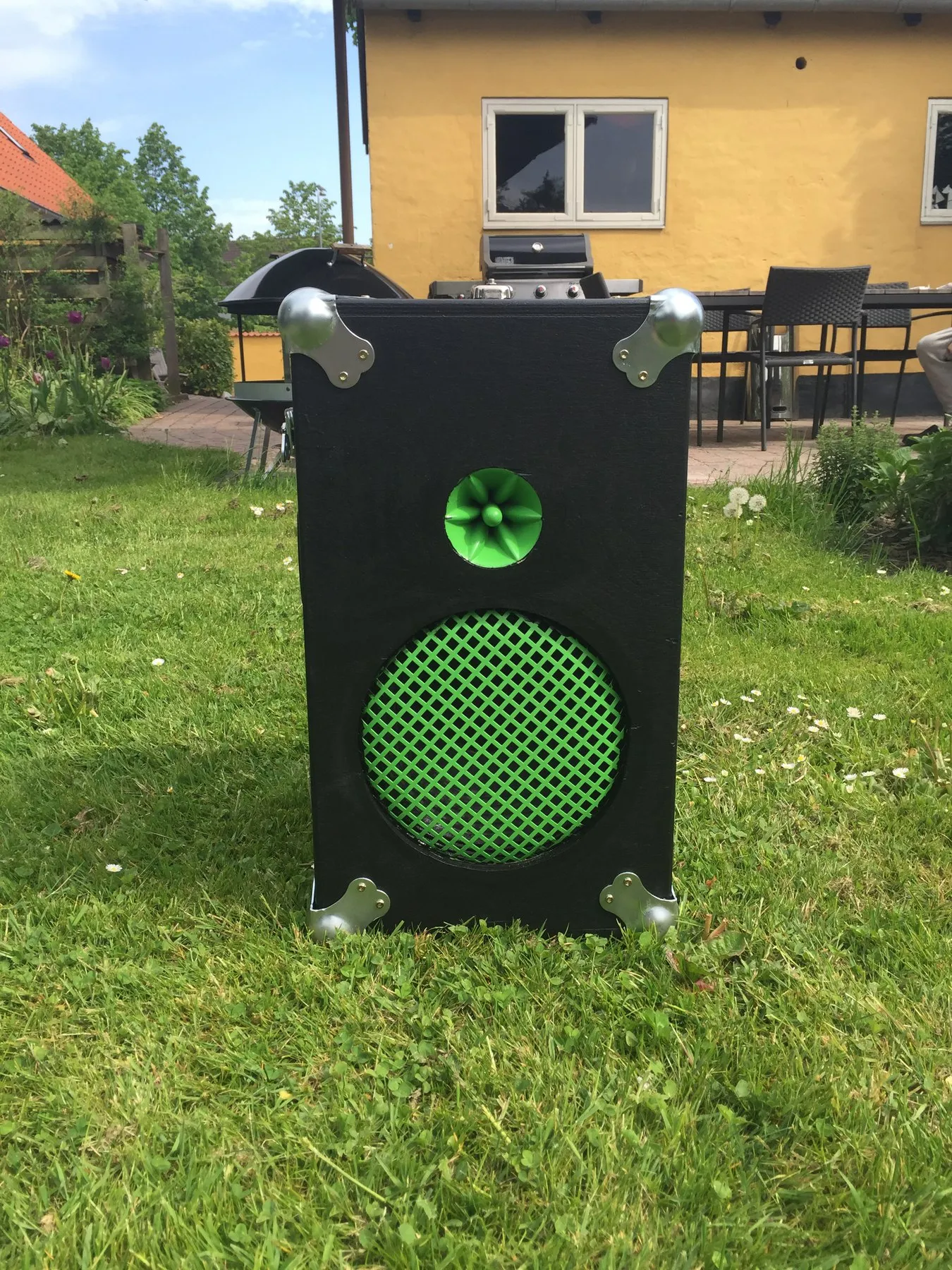
The finished Halfinator.
2017: The mobile PA
The final build combined everything into one mobile PA: the two CUBO 15 subwoofers, store-bought PA top speakers, new amplifiers with DSP tuning, and a DJ mixer, built into a wheeled DJ booth on a trailer. The external-amplifier setup carried over, and from time to time the Boominator was connected through its 8-pole connector as an extra top speaker.
Design
The booth was designed in SketchUp around the subwoofers and top speakers, with space for the DJ in the middle and the electronics below.
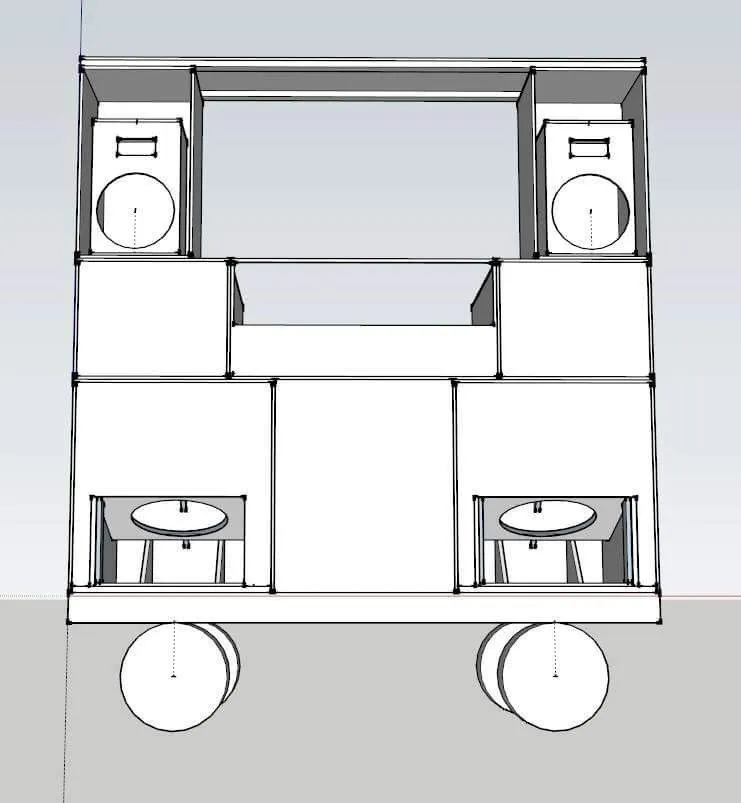
Front view of the SketchUp design.
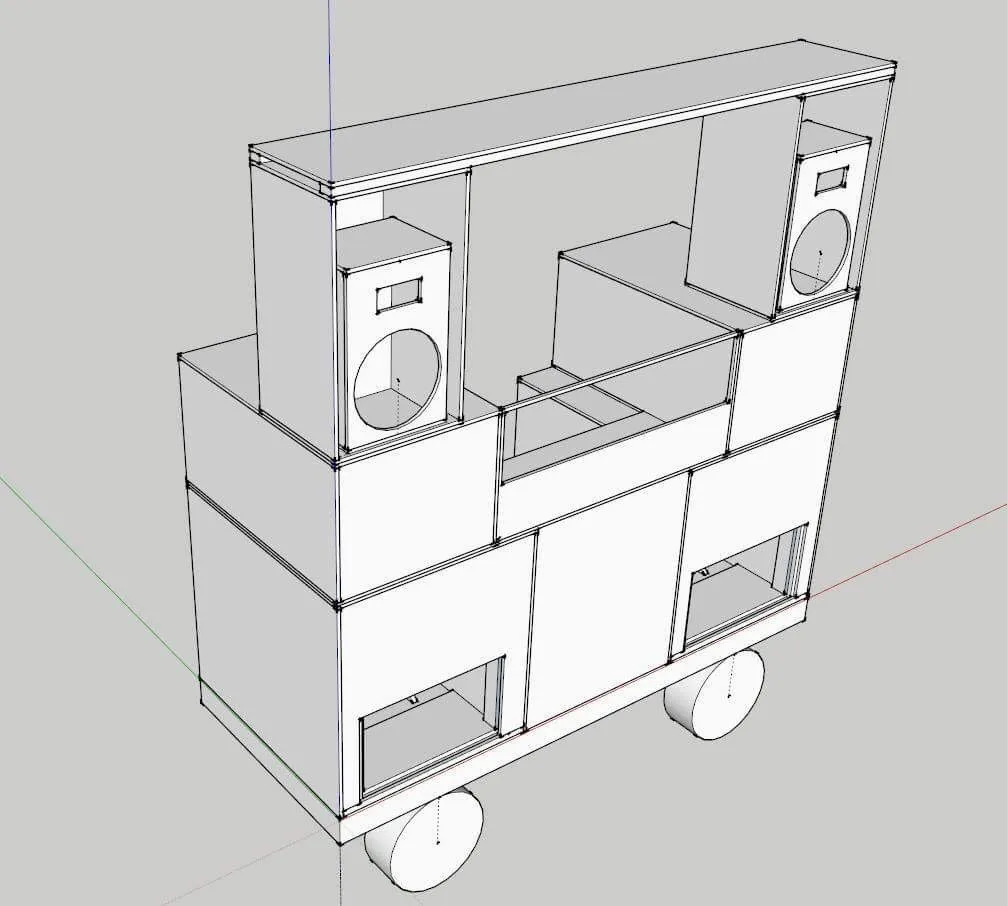
3D view of the SketchUp design.
Build and power
The booth was built on a trailer chassis. The power system combines batteries, solar charging and an inverter for 220 V AC, so the PA runs off-grid. Arduino-based control drives LEDs synchronised to the music.
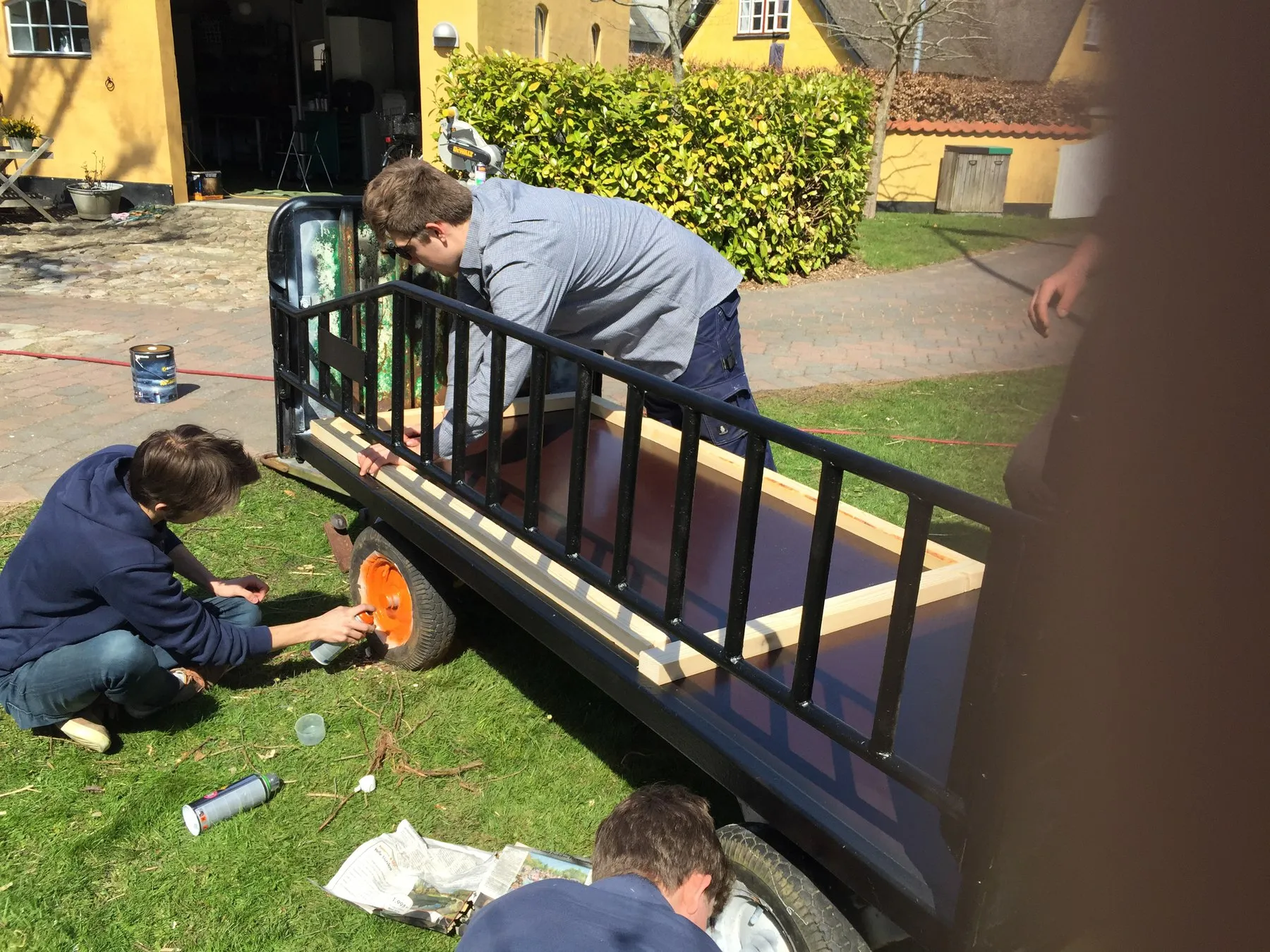
Building the PA on the trailer chassis.
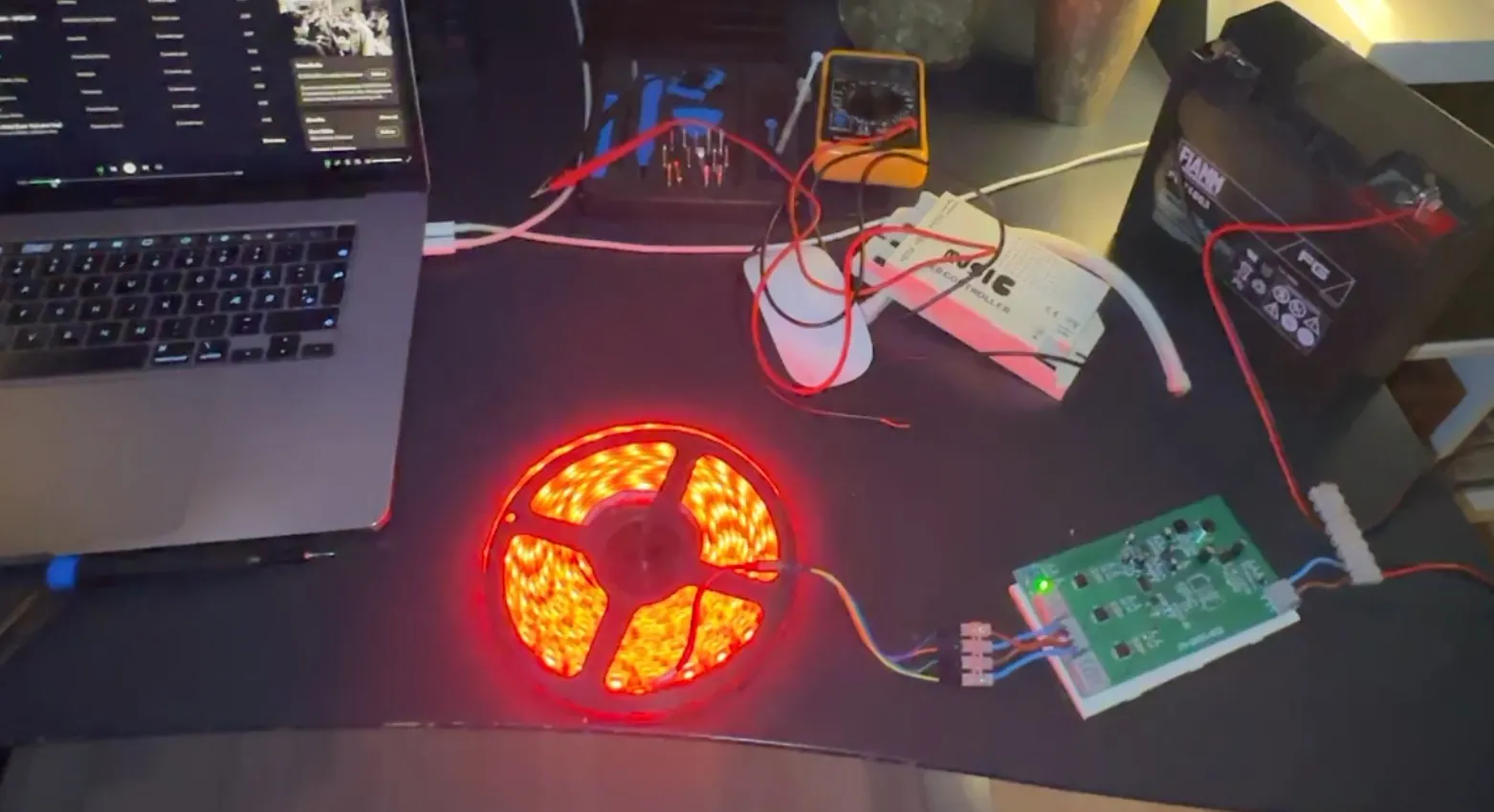
Testing the LED strip and the control PCB after soldering.
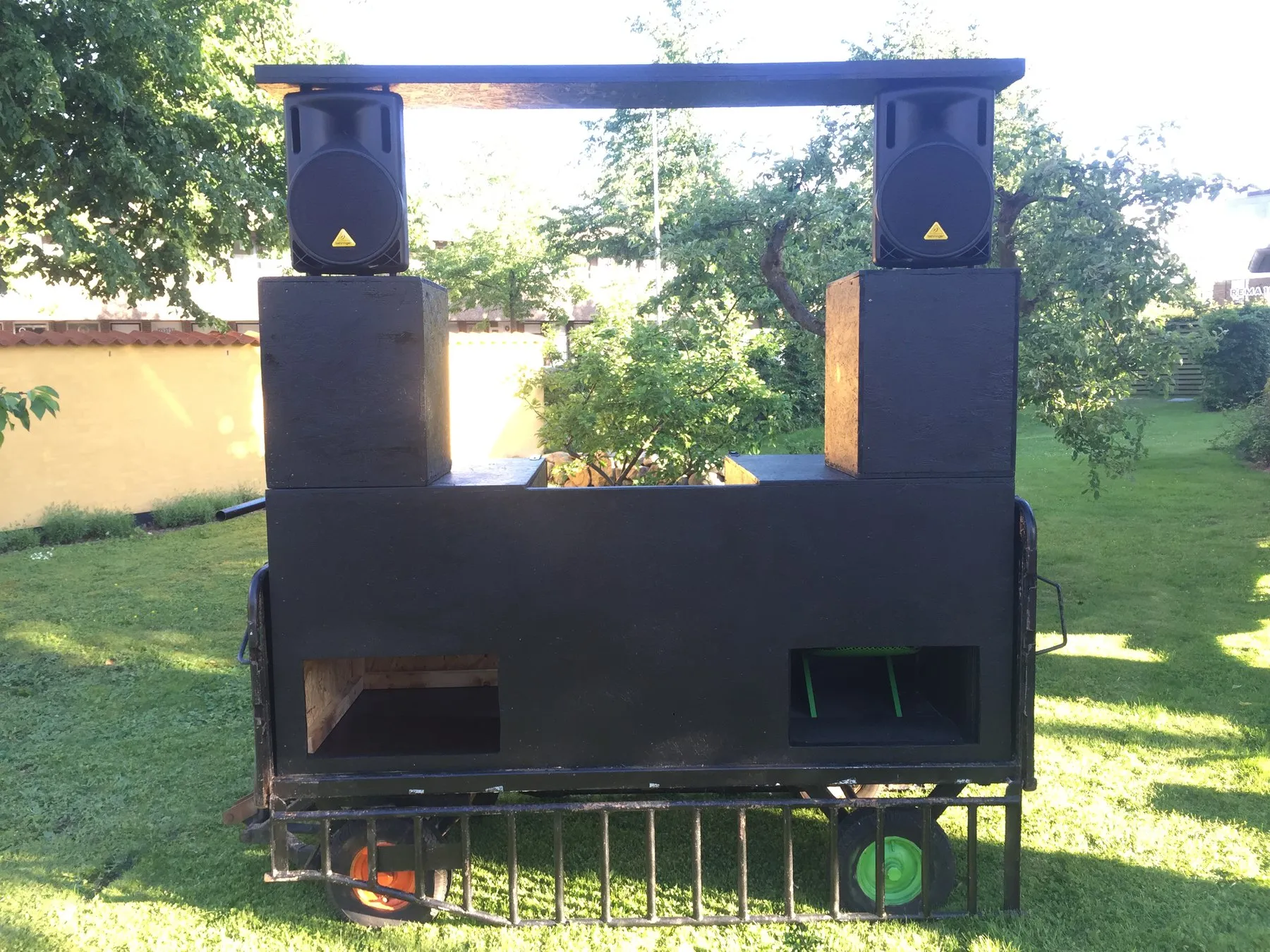
The finished woodwork, painted black, before any artwork.
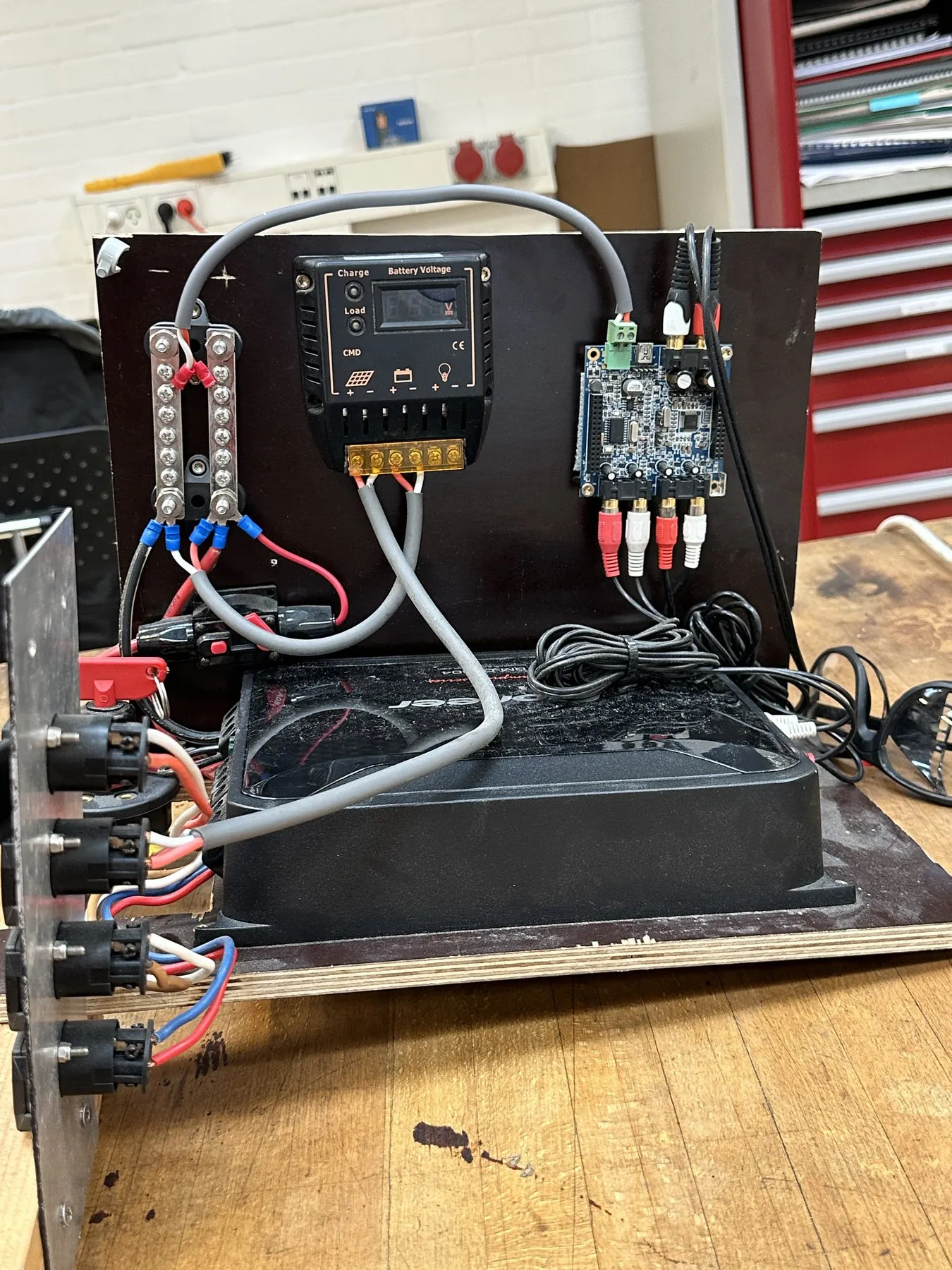
The power panel during the build.
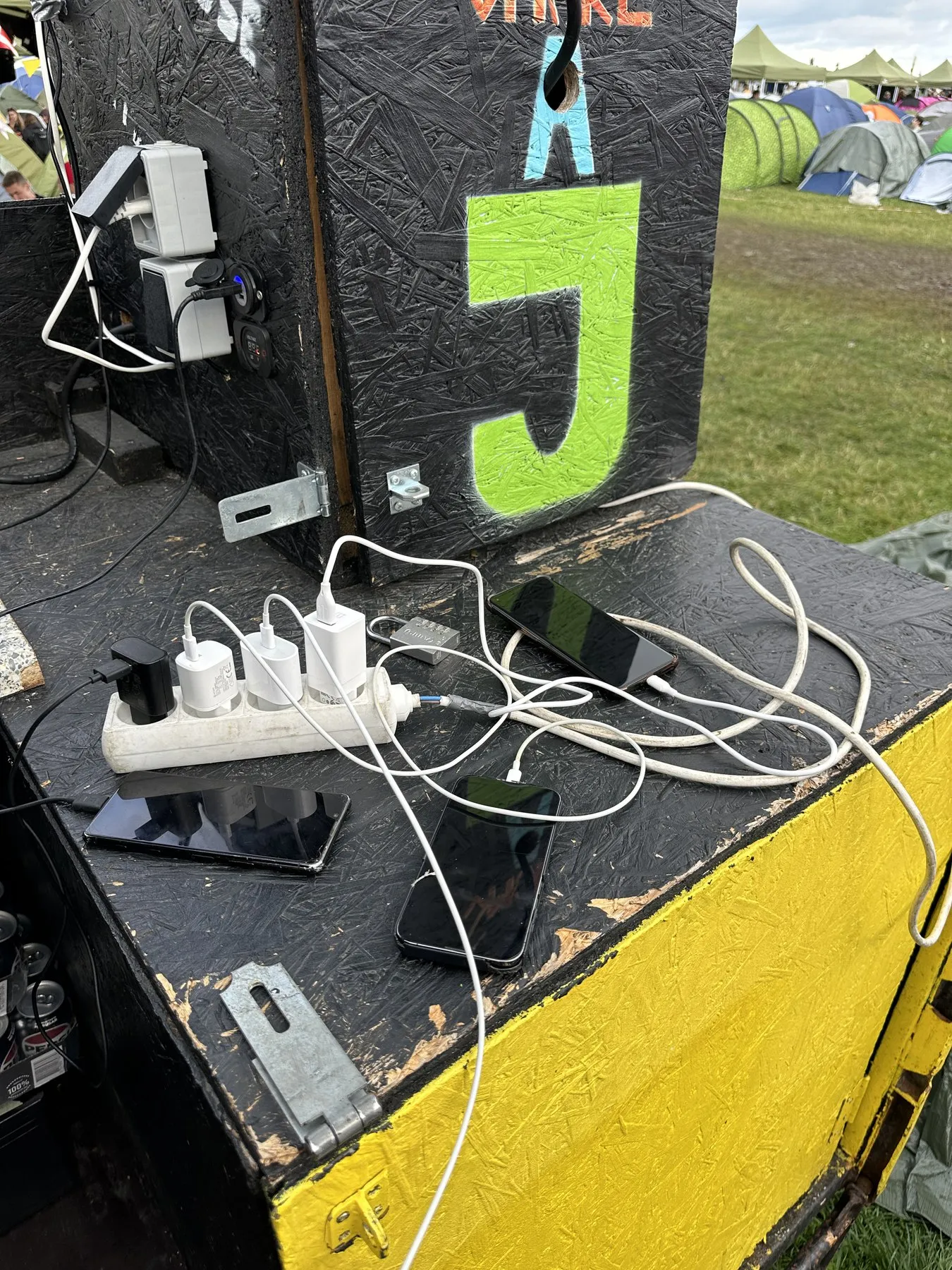
Power interfaces on the PA, with USB charging and 220 V outlets.
Since 2017
The core sound system has stayed the same since 2017, while the rest has been upgraded for life at festivals: phone chargers and 220 V outlets for things like air mattress pumps, new lighting equipment and light controllers, and different DJ mixers over the years. The booth has also been repainted for new looks.
The DSP was tuned outdoors with field recordings. An outdoor PA has nothing for the sound to reflect from, and on battery power the lowest frequencies are the most expensive, since they take the most power to drive in the subwoofers. The tuning therefore cuts as much of the deepest sub-bass as possible without hurting the sound quality, and gives more weight to the punchier upper bass, which keeps the feel of the music within the battery budget.
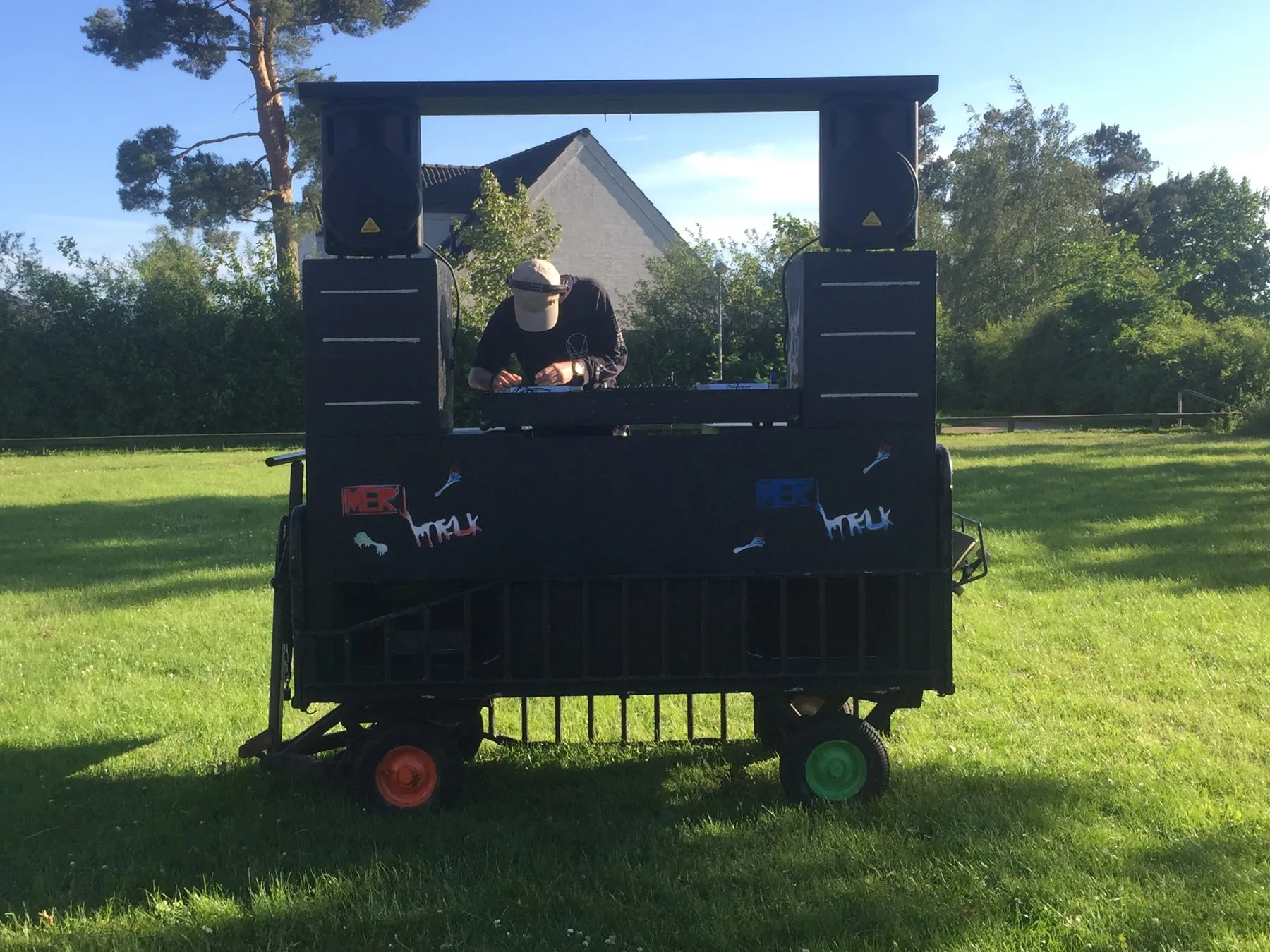
Field recordings and DSP tuning for the best outdoor sound.
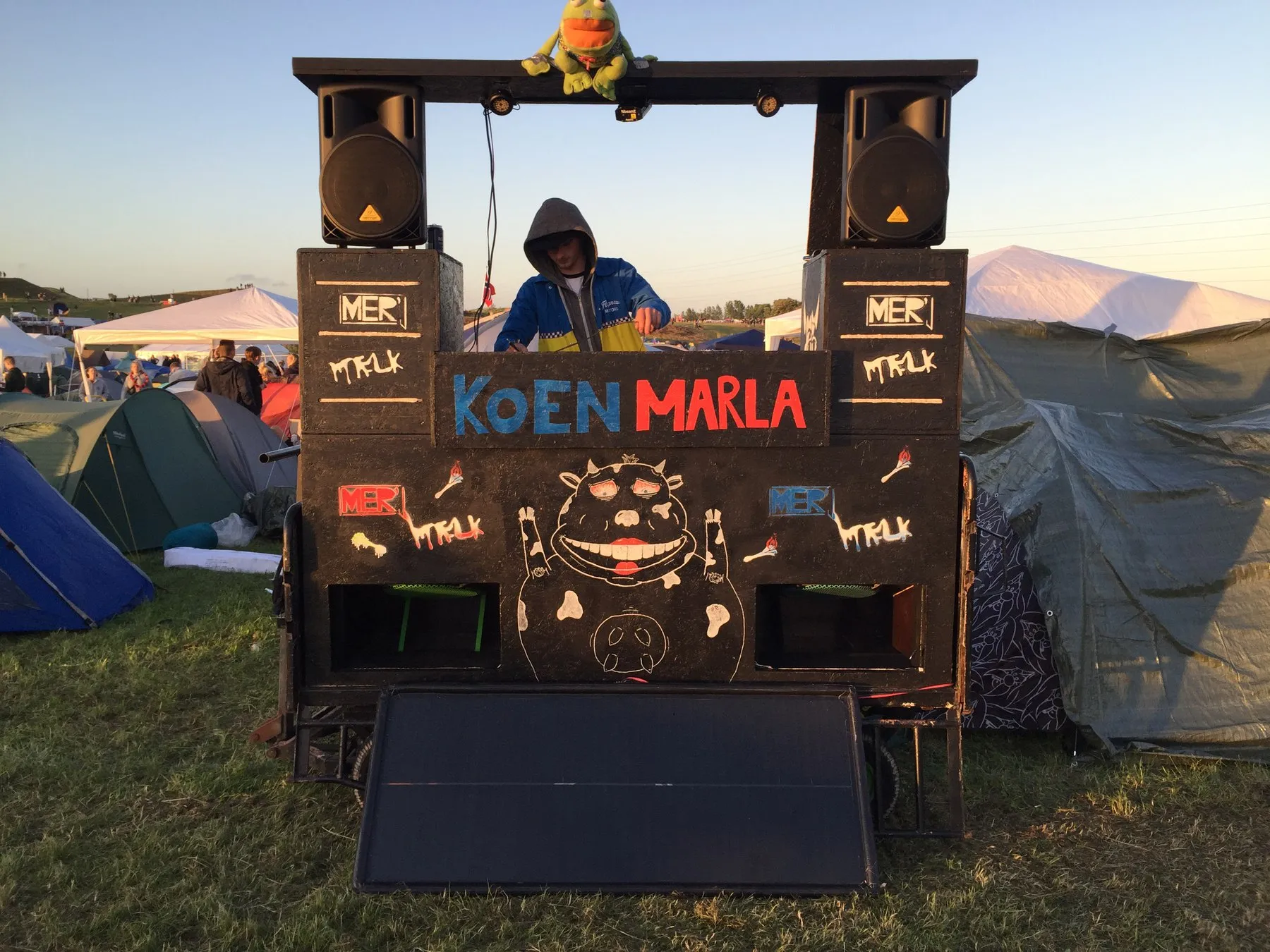
The PA at a festival campsite at sunset.
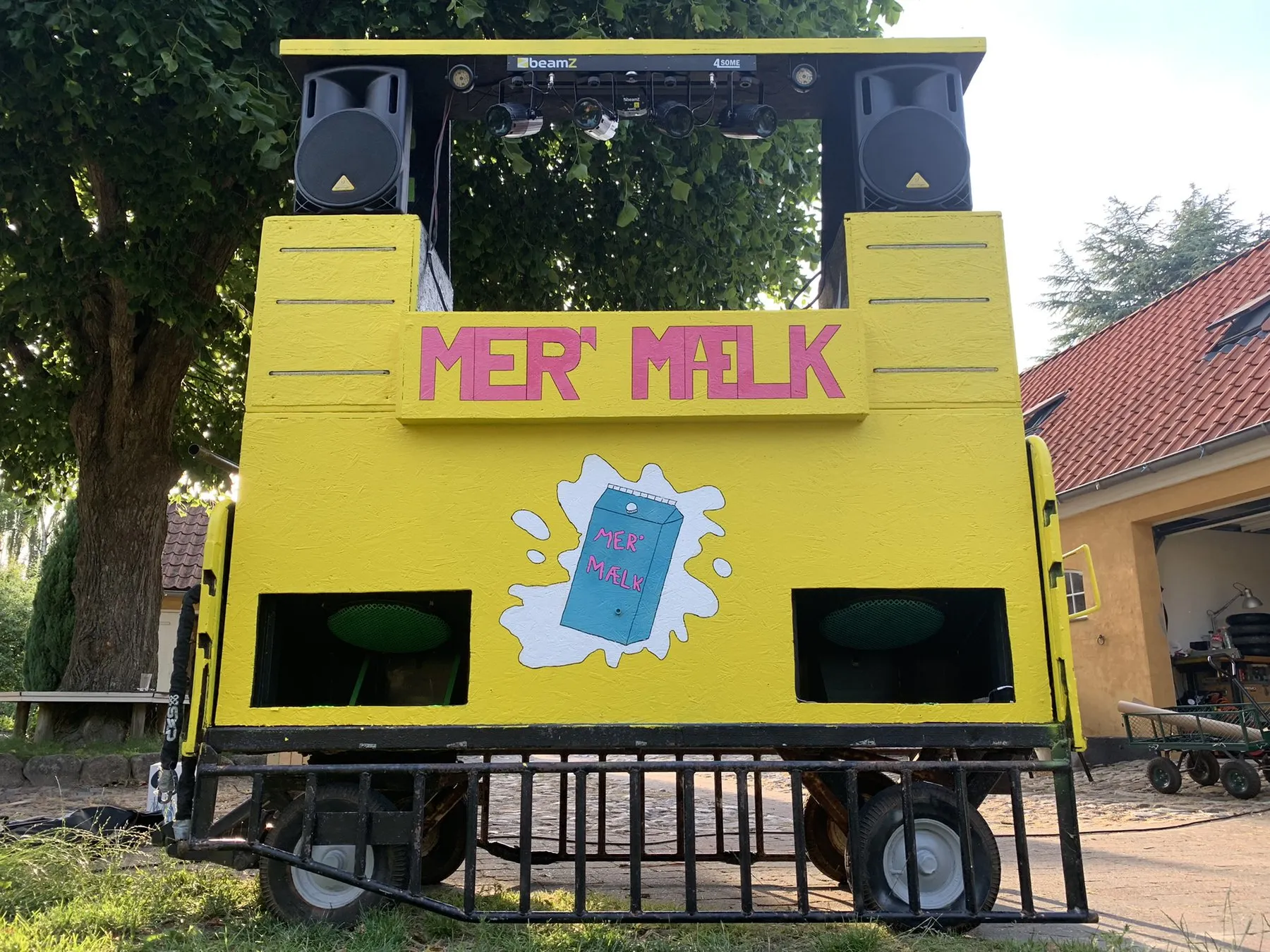
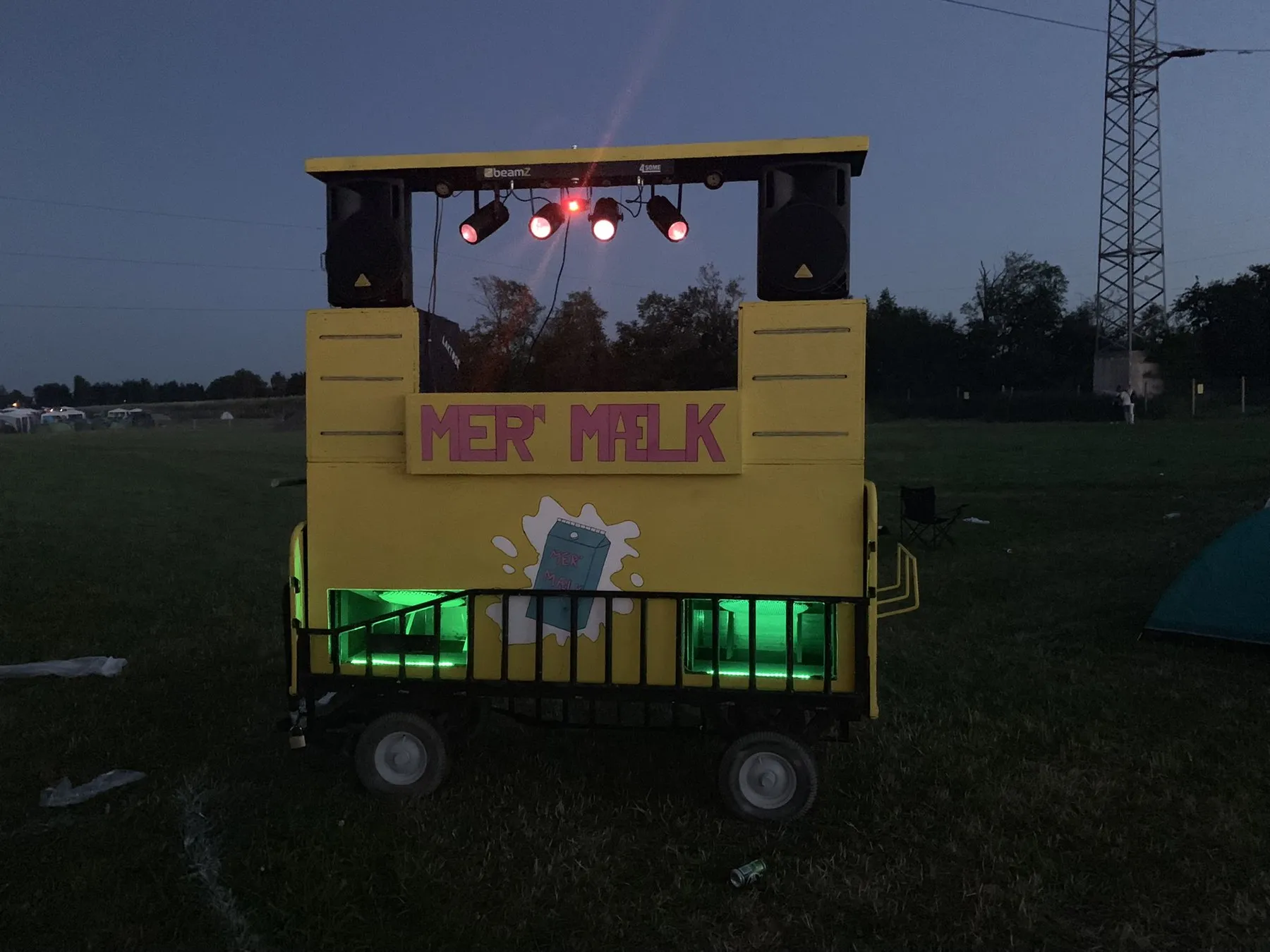
The PA repainted yellow.
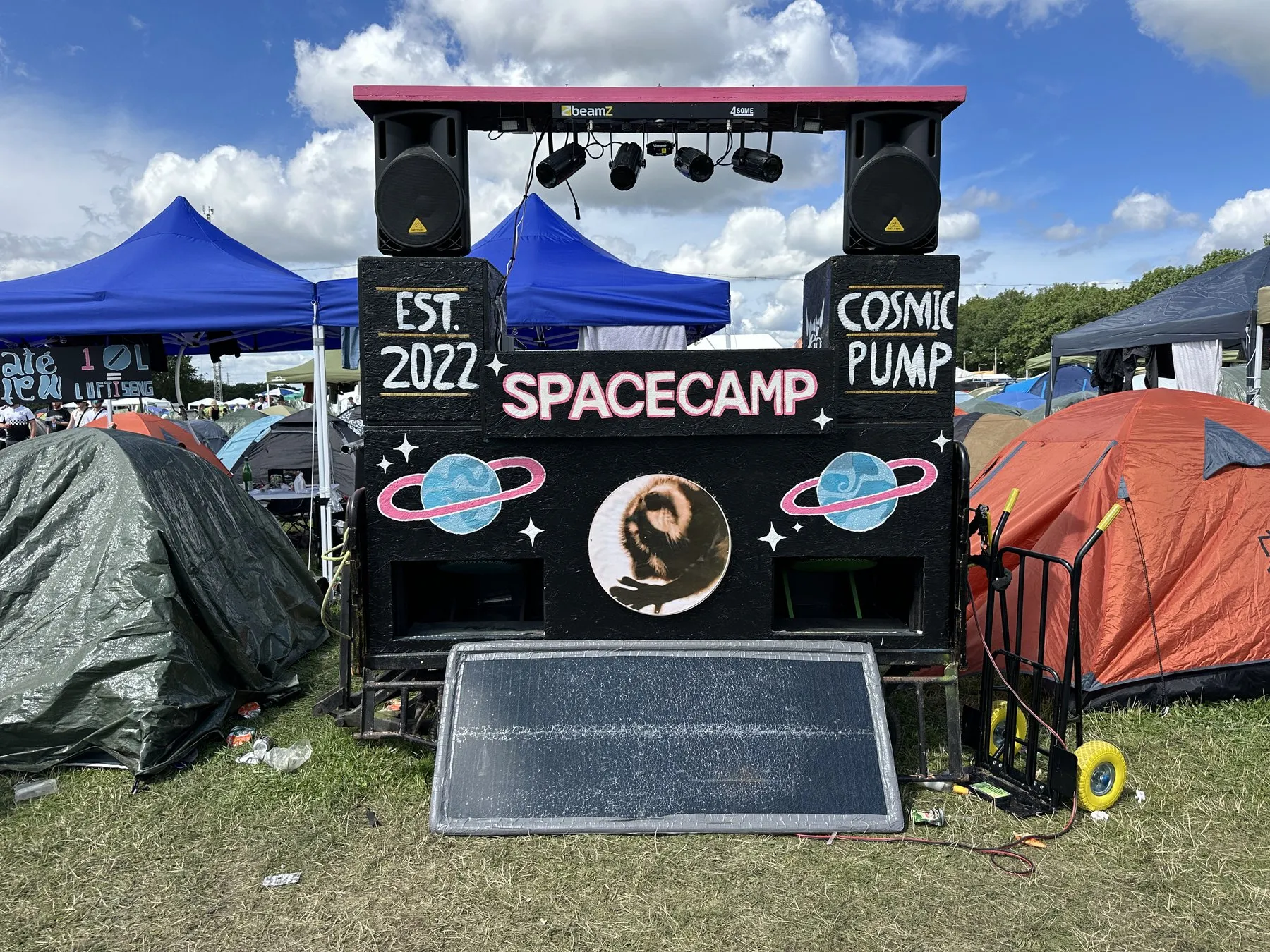
The PA at a festival campsite, with its solar panel in front.